Category: Language of Silent Film
-
One of the Five Senses
Chapters 4 and 5 of The Silent Clowns’ “Part One” illuminate the two most important elements of what makes silent film Silent Film, a specific entertainment medium of its own. As opposed to seeing it as regular film or video as we know it, with one arm tied behind its back, its shoelaces knotted together…
-
Reality, Depicted and Altered
Chapter 3, “The Fact in the Fantasy”, reminds us that Silent Film – although silent, monochromatic and slightly faster – is still a capturing of reality on celluloid. Regardless of the aspects of the medium that are either what make it a unique expression or are seen as handicaps, it’s still film. Unlike painting or…
-
Reality, Minus some of the Logic and Consequence
A friend of mine once enlikened watching a silent film, especially in a theater, to being in a sort of trance state. An apt distillation of what Walter Kerr discusses in chapter two of The Silent Clowns’ Part One, “The Unique Experience”. The experience he writes of is a mix of one that only exists…
-
More Logical The Other Way Around
Walter Kerr opens his book The Silent Clowns with five chapters on the core aesthetics of Silent Film itself. Perhaps not an obvious choice for a tome on comedy films from the ‘teens and ‘twenties, but I believe that understanding these basic concepts is important — essential, even — to grasping why silent film comedy…
-
A Universal Non-Spoken Language
We’ve all heard of or referred to Silent Film as a universal language. It’s not just because the films are wordless, although that certainly levels the playing field. But it’s true. But it’s because of that same leaving-out that is at the core of the medium’s communication and storytelling. There is something about Silent Film…
-
That’s Not a Real Car
We use our imagination to fill in the elements left out, with Silent Film. As obvious as this may be to adults who’ve seen silent film, it’s ironic that there’s an assumption that kids won’t go for silents. Ironic, because children are in way better touch and access of their imagination. Parents and educators are…
-
The Reason Silent Film “Still Works”: Your Brain
People who haven’t seen Silent Film — or experienced it — are always surprised to know there’s an interest in it. When I tell people kids eat it up when I show Keaton in schools they are amazed. They shouldn’t be. But it’s because they’re thinking of the wrong side of the brain. Walter Kerr…
-
Battling the Elements at 16 Frames Per Second
Buster Keaton had an astounding grasp of what works at what cranking speed and how best to compensate for these frame rates physically. It’s part of his comedic toolbox and was part of his filmic style. This is what makes the second reel of The Boat (1921) something of an anomaly. There are a few…
-
Not All Silent Film Needs A Reality Check
“Silent films were never really silent” is one of the main tenets one hears or says in defense of silent films. The medium’s name itself has stuck since the talkie transition, conjuring up a negative in the imagination of anyone who reads or hears it. The name has also reinforced another notion about these movies:…
-
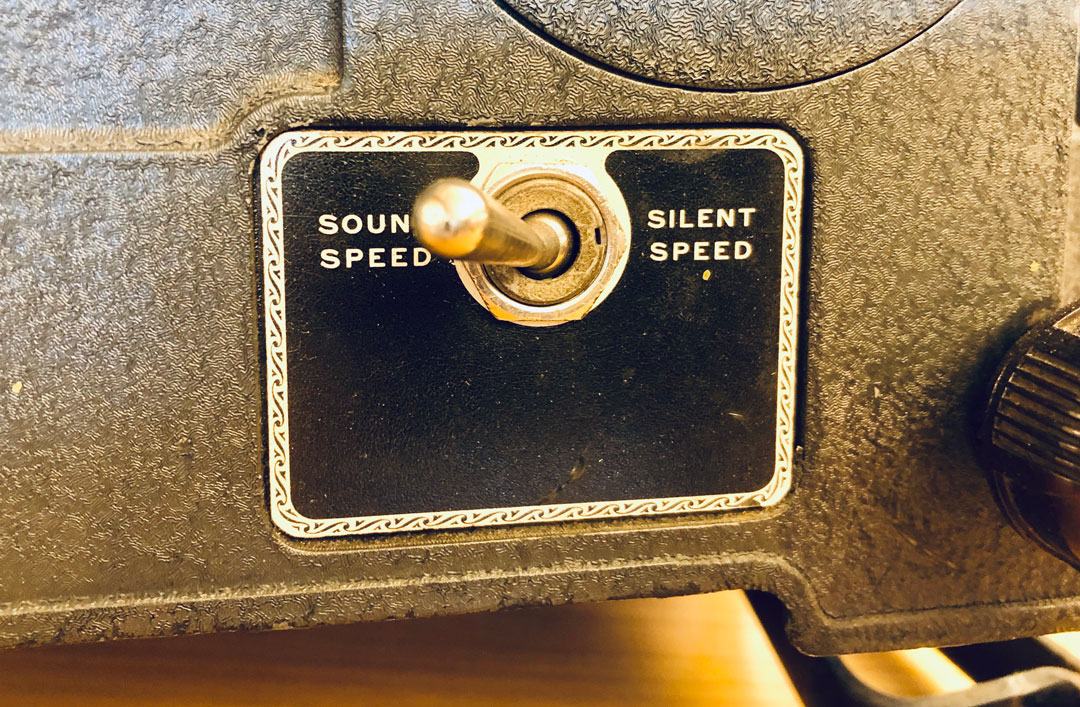
“Silent Speed” and 16mm Projectors
There is a notion that silent films should be shown at what is often referred to as “silent speed”, or 18 frames per second. In the silent era, motion picture projectors were hand-cranked and, later, motorized but with rheostats. A question I’ve pondered for some time is: where does the term “silent speed” come from,…