
Category: Undercranking
-
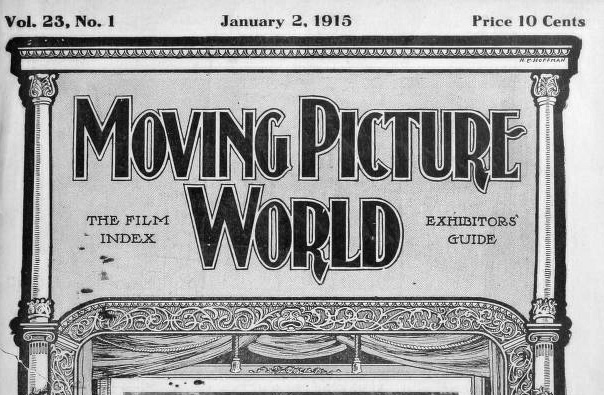
Projection Speed-up Cited in 1915 Article
It’s always fun finding another nugget of evidence as to how far back the practice of silent era sped-up film projection went. During the pandemic, I made a reading project of going through issues of the Moving Picture World from 1916, and then on to 1917. I’d stopped this a couple of years ago, but…
-
Exploring the Speed of Silent Comedy Film – test #5
Ever slam your hand in a door? This is what we played with in the last of the five videos. There’s a way to do this safely and make it look real, using the ersatz sleight-of-hand of the speed-up of silent film We took this at 12 fps, or we started at 16 or 14…
-
Exploring the Speed of Silent Comedy Film – test #4
One of the facets of silent film, and silent film comedy, is that since the film overall is being projected faster than taking speed, you can take individual shots at different speeds. When run together, the viewer won’t see the difference — as long as the appropriate adjustments in performance tempi are made. Rather than…
-
Exploring the Speed of Silent Comedy Film – test #3
There are a few sequences in Chaplin’s “The Pawnshop” (1916) where Charlie and co-worker John Rand engage in slapstick hitting fights. It’s almost a running theme throughout the film, and they’re executed with precision by two clowns who really know how to hit each other…and be hit by one another. It’s a technique that goes…
-
Exploring the Speed of Silent Comedy Film – test #2
One of the gags I’ve seen in silent comedies many times that’s really something you’d typically see in an animated cartoon. The trick is in creating the illusion of someone weighing a fraction of what they actually do. Usually one character is upset with another, grabs him or her, and then lifts and tosses them…
-
Exploring the Speed of Silent Comedy Film – test #1
One of my fascinations with silent film is with how it is that it is shown faster than the speed at which it was shot, but doesn’t look it. Once I figured out that the secret is in adjusting the tempo of the performers’ physicality, the next step was to shoot tests to see if…
-
“Her Painted Hero”, Shot Through a Projector
I discovered this little nugget about film projection speed in a January 1916 issue of Moving Picture World, a trade magazine published throughout the silent film era. It’s rare to find mentions of a film’s running speed in the trades, very rare. When it happens, it tends to be the sort of complaint I found…
-
Battling the Elements at 16 Frames Per Second
Buster Keaton had an astounding grasp of what works at what cranking speed and how best to compensate for these frame rates physically. It’s part of his comedic toolbox and was part of his filmic style. This is what makes the second reel of The Boat (1921) something of an anomaly. There are a few…
-
Undercranking Study: Buster Keaton Trails a Suspect
Buster Keaton, along with Larry Semon, made the best use of taking different shots at different cranking speeds within a scene. This part of the Silent Film language was available and used by everyone in the silent era. Since the film was running faster in projection, mixing cranking speeds is undetectable. Action stars like Douglas…
-
A Slightly Faster Sunrise
Kevin Brownlow mailed me an item from “Variety” when I was beginning my research on silent film projection and filming speeds. What struck me is that it was yet another clue that silent era filmmakers had an expectation of what speed their films would be shown at when they were making their picture. The way…